In 2020, Markowitz gave her “biggest piece of advice” to parents during the Covid lockdowns, “do not stress about it.” Markowitz goes on to dismiss as “just not true” the concerns of parents about their children not learning or falling behind. In retrospect this is so tone-deaf coming from a non-parent considering the huge decline in reading and arithmetic scores due to the pandemic and lockdowns
Evidence
Full text of these pages
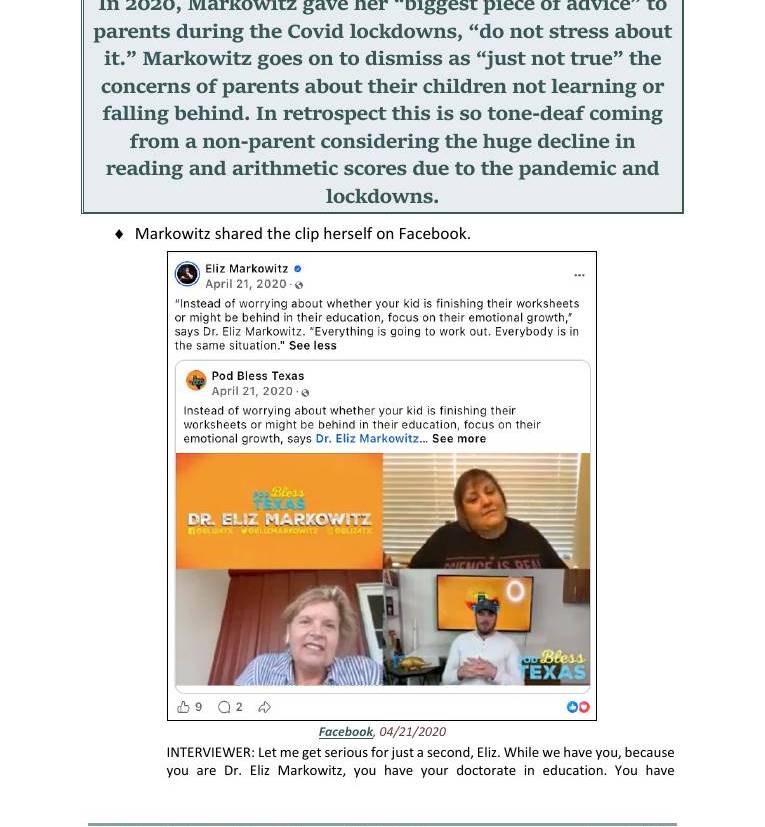
In 2020, Markowitz gave her “biggest piece of advice” to parents during the Covid lockdowns, “do not stress about it.” Markowitz goes on to dismiss as “just not true” the concerns of parents about their children not learning or falling behind. In retrospect this is so tone-deaf coming from a non-parent considering the huge decline in reading and arithmetic scores due to the pandemic and lockdowns. ♦ Markowitz shared the clip herself on Facebook.
Facebook, 04/21/2020
INTERVIEWER: Let me get serious for just a second, Eliz. While we have you, because you are Dr. Eliz Markowitz, you have your doctorate in education. You have
dedicated your life to public schools and improving the American education system. The coronavirus has made it difficult for families because they're having to homeschool their kiddos right now, right? What advice do you have to folks in your district or around Texas who are struggling to juggle their full-time jobs and educate their kids at home? MARKOWITZ: My biggest piece of advice would be to not stress about it. Just let your kids survive through this crisis. Everyone's worried about loss of learning, and oh my gosh, if we don't have these two or three months of school, my kid's going to be so far behind in the greater scheme of things. And quite frankly, it's just not true. From this period of time in Texas public schools till the end of the year, normally we'd be doing drill and kill for the star test anyway, so on some great experiential learning at this point. And I think that this entire situation is a learning experience in and of itself. It's going to teach students about what happens in a national and world pandemic, which is something we've never seen. It's going to teach them new technologies that they're going to discover because they can't go anywhere. It's going to teach people new ways of being empathetic and sympathetic because they're going to have to reach out to their friends and family in alternative ways and to check in on them, and it's it's going to also be very character molding as we deal with the increasing death rate and infection rate, and this is something that I truly think is going to affect our children for for the rest of their lives. I think this is their defining moment. This is their Cuban missile missile crisis. This is their Vietnam War. This is their 911, and now this is what they're going to remember. But I think worrying about completing worksheets that are mandated by the 10th grade teacher on biochemistry formulas shouldn't be our top concern at this point because everything's going to work out. Nobody, everybody's in the same situation, so nobody's going to be penalized. So I don't think we should be freaking out about our kids becoming dumb during this crisis, but rather be focusing more on their emotional growth…
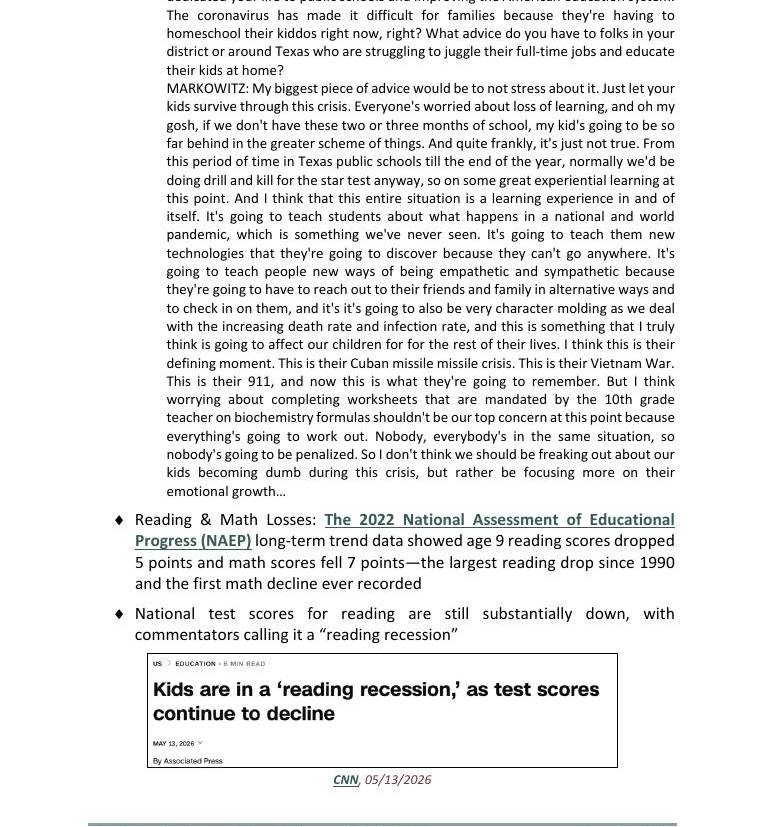
♦ Reading & Math Losses: The 2022 National Assessment of Educational Progress (NAEP) long-term trend data showed age 9 reading scores dropped 5 points and math scores fell 7 points—the largest reading drop since 1990 and the first math decline ever recorded ♦ National test scores for reading are still substantially down, with commentators calling it a “reading recession”
CNN, 05/13/2026